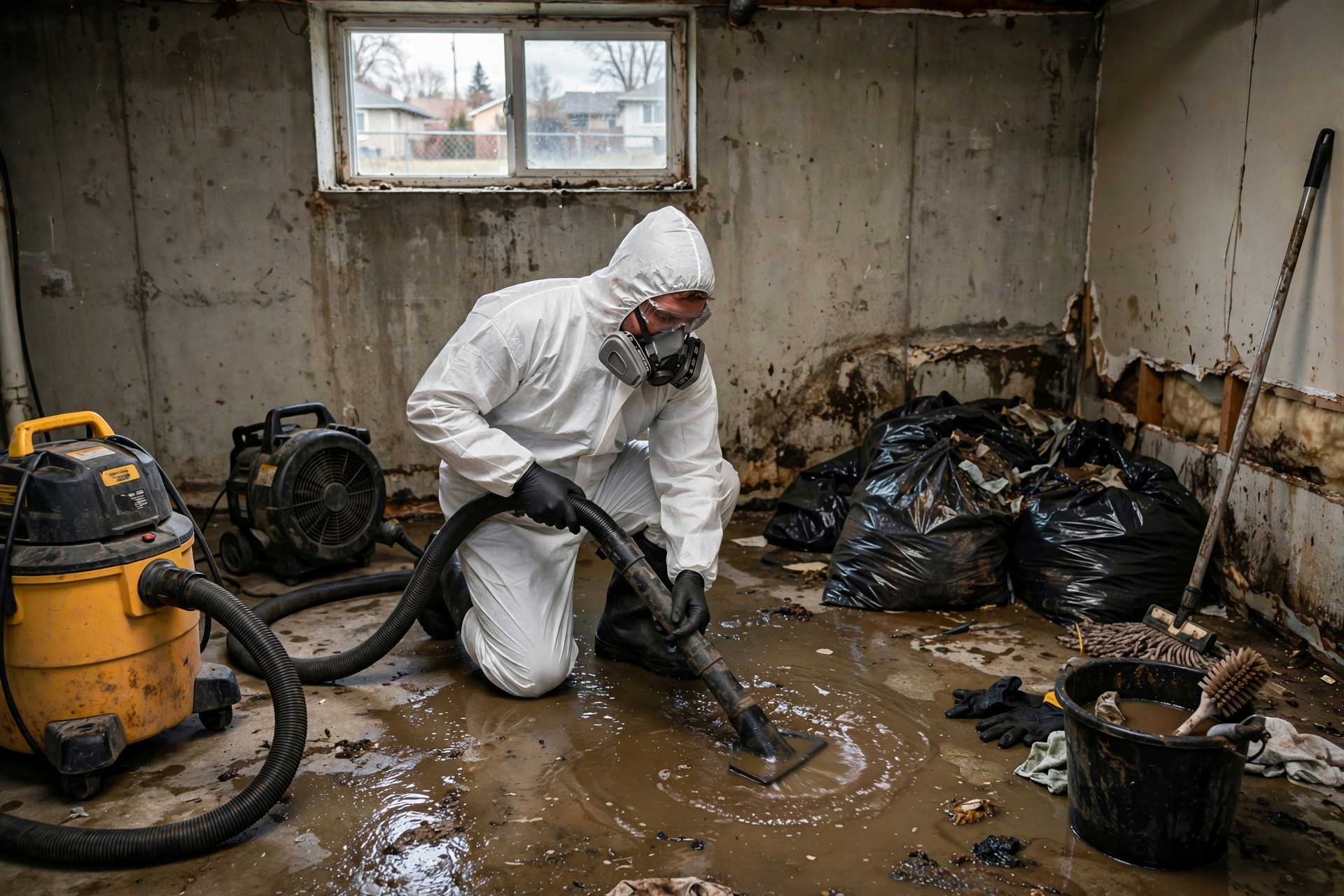
Kearns homes built in the 1950s and 1960s often have cast-iron or clay sewer lines that crack or separate where tree roots from older yards push against them. When a backup reaches the basement, the first priority is stopping the flow and containing the waste before it migrates into finished spaces or HVAC ducts. Crews use truck-mounted extraction units sized for the volume typical in these smaller lots, then remove saturated drywall up to the flood line to prevent hidden mold behind the stucco or brick exteriors common here.
Winter temperature swings in the Kearns area freeze shallow sewer laterals that run close to the surface, causing repeated blockages that send effluent into crawl spaces rather than finished basements. Technicians must work around the compacted clay soil that holds moisture and slows drying, often requiring longer dehumidification runs than in sandier soils farther west. Every job includes proper disposal at approved Salt Lake County facilities and documentation for insurance adjusters who know the recurring issues in this housing stock.
After extraction, all porous materials that contacted the waste are removed and surfaces receive a two-step antimicrobial process followed by ATP testing to verify reduction of contaminants. Odor removal follows with hydroxyl generators rather than ozone in occupied homes to avoid damaging electronics or fabrics. Final walkthroughs include checking cleanouts at the property line to confirm the main line is flowing before any reconstruction begins.
Technician insight
In Kearns the thing that catches most people out with sewage backup cleanup is the clay soil around 1950s foundations that holds water for weeks after extraction. Homeowners often stop drying too soon and hidden moisture reappears behind the original plaster walls.
Winter Backup Into Kearns Crawl Space
A frozen lateral under a 1962 Kearns home sent sewage into the crawl space after a January thaw. Extraction removed the liquid and saturated insulation; crews treated the soil and framing, then ran dehumidifiers for ten days until moisture readings dropped below 12 percent. The homeowner avoided mold growth that commonly follows incomplete drying in this soil type.
Sewage Backup Cleanup Services We Offer
✓Emergency Sewage Extraction
Rapid removal of standing wastewater from basements and crawl spaces using truck-mounted pumps sized for Kearns lot sizes.
✓Contaminated Material Removal
Safe disposal of saturated carpet, padding, drywall, and insulation that contacted sewage in older Kearns homes.
✓Structural Drying and Dehumidification
Targeted drying of concrete, framing, and subfloors using equipment suited to the clay soils that retain moisture around Kearns foundations.
✓Biohazard Cleaning and Disinfection
Application of EPA-registered disinfectants followed by verification testing on all affected surfaces.
✓Odor Elimination Treatment
Hydroxyl and air scrubbing to remove sewage odors from porous surfaces without damaging finishes in occupied homes.
✓Post-Cleanup Verification
Final inspection and documentation confirming the property meets health department standards before reconstruction.
Sewage Backup Cleanup Cost in Kearns, UT
| Service | Typical Range | What Affects It |
|---|---|---|
| Initial Assessment | Free | Waived when cleanup is performed |
| Minor Backup (under 500 sq ft) | $900–$1,800 | Extraction, disinfection, basic drying |
| Standard Backup (500–1,000 sq ft) | $1,600–$3,200 | Includes material removal and extended drying |
| Crawl Space Sewage Cleanup | $1,200–$2,500 | Access and clay-soil drying add time |
Ranges are typical for Kearns, UT and confirmed with an exact written quote before any work starts.
How it works
- 1
Site Assessment And Containment
Technicians locate the backup source, map affected areas, and set up containment barriers to protect unaffected rooms.
- 2
Waste Extraction
Standing liquid is pumped out and solid waste is removed using HEPA vacuums and approved disposal methods.
- 3
Cleaning And Disinfection
All hard surfaces receive antimicrobial treatment and porous materials are removed or treated as needed.
- 4
Drying And Final Testing
Moisture levels are monitored until dry, followed by odor control and verification before the space is released.
Pricing
Costs depend on volume, affected square footage, and whether crawl space or finished basement work is required.