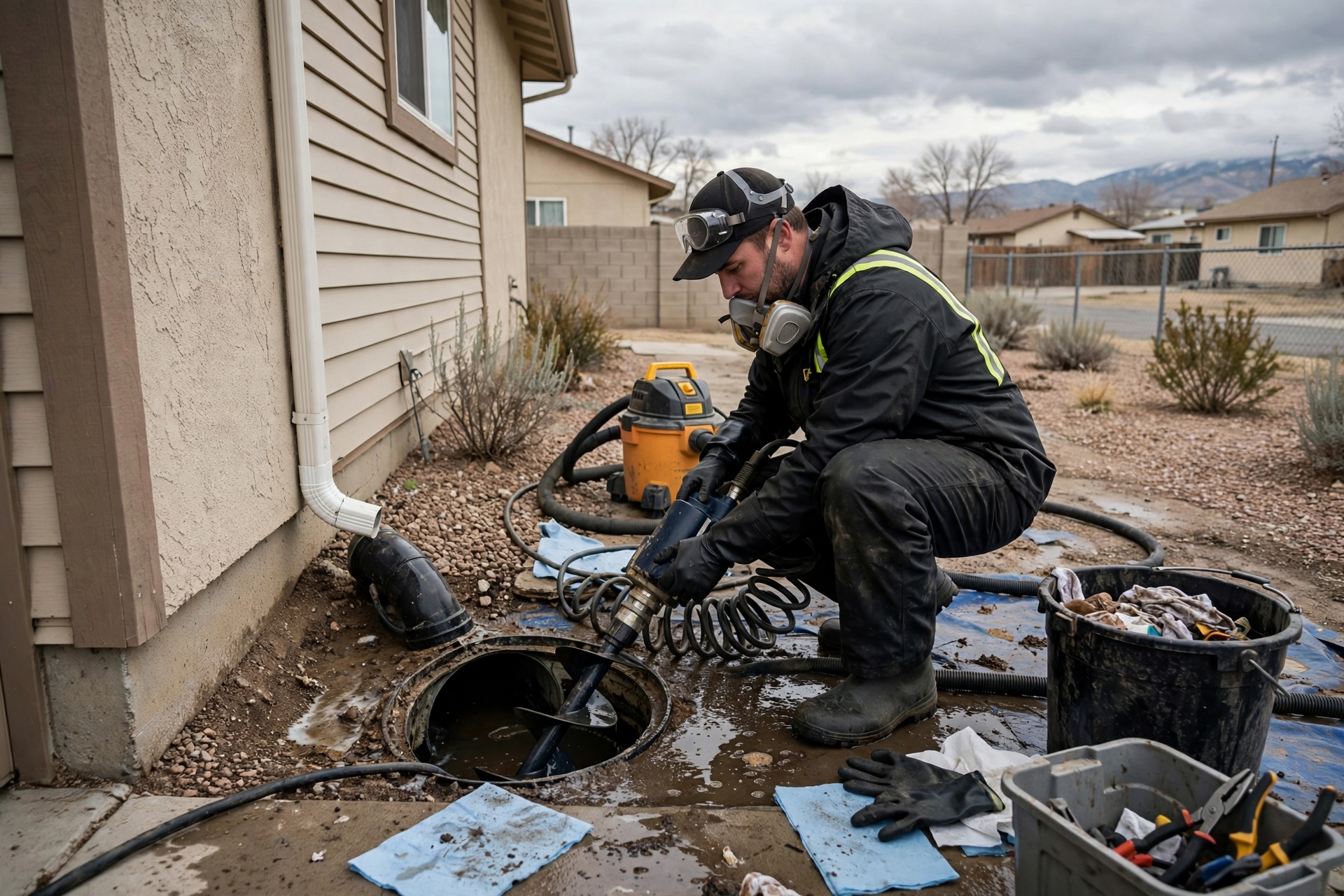
Kearns homes built in the 1950s and 1960s often have clay or cast-iron sewer lines that crack from shifting soil and tree roots common along streets like 4700 South. When these lines back up, sewage can surface in basements or yards within hours, especially after heavy spring rains or during winter freeze-thaw cycles that push roots deeper. Crews start with a camera inspection to locate the blockage without unnecessary excavation, then use hydro-jetting or mechanical augers sized for the 4-inch and 6-inch lines typical in the neighborhood.
Edge cases in the Kearns area include shared laterals between neighboring properties and grease buildup from older kitchen plumbing that lacks modern traps. These situations require isolating the affected section before pumping out standing waste to avoid cross-contamination. Salt Lake County health rules require full removal of contaminated soil and disinfection with EPA-registered products before any restoration work can begin, and crews document every step for insurance claims.
Access challenges arise in homes with finished basements or narrow side yards where equipment must be carried in by hand. Technicians protect flooring with plastic sheeting and negative-air machines to keep odors from spreading through the house. After extraction, the line is flushed and tested to confirm flow before the property is released.
Technician insight
In Kearns, the thing that catches most people out with Sewer Line Backup Cleanup is how quickly tree roots from the original 1950s plantings reach the clay laterals during our cold winters; once the ground thaws the line often collapses without warning and homeowners assume it is just a simple clog.
Kearns Basement Backup After Winter Thaw
A homeowner on 4700 South noticed sewage rising in the basement laundry sink after a sudden warm spell. Camera inspection showed roots had crushed a section of the original clay line. Crews extracted the waste, cleared the roots, and sanitized the concrete floor before restoring service.
Sewer Line Backup Cleanup Services We Offer
✓Root Intrusion Removal
Clear roots from clay and cast-iron lines common in pre-1970 Kearns homes using targeted cutting heads that protect pipe walls.
✓Grease Buildup Extraction
Remove hardened grease and soap scum from kitchen laterals that frequently clog in older Salt Lake County properties.
✓Camera Line Inspection
Locate blockages and pipe damage with video inspection before any digging begins on Kearns sewer laterals.
✓Basement Sewage Extraction
Pump and remove standing sewage from finished and unfinished basements after line backups in Kearns homes.
✓Post-Backup Sanitization
Apply hospital-grade disinfectants to floors, walls, and soil to meet Salt Lake County health standards after sewage exposure.
Sewer Line Backup Cleanup Cost in Kearns, UT
| Service | Typical Range | What Affects It |
|---|---|---|
| Emergency Callout and Camera Inspection | $175–$350 | Higher after midnight or on holidays; covers most Kearns single-family homes |
| Root or Grease Line Clearing | $450–$850 | Varies with length of run and whether excavation is needed |
| Basement Sewage Extraction | $600–$1,200 | Depends on volume and whether flooring must be removed |
| Full Sanitization and Disposal | $300–$600 | Includes county-compliant waste hauling and disinfectant application |
Ranges are typical for Kearns, UT and confirmed with an exact written quote before any work starts.
How it works
- 1
Initial Assessment
Technician arrives within two hours, runs a camera through the cleanout, and identifies the blockage location and pipe condition.
- 2
Containment and Extraction
Set up containment barriers and pump standing sewage into sealed trucks to prevent further spread in the home or yard.
- 3
Line Clearing
Use hydro-jetting or root-cutting equipment sized for Kearns sewer lines until full flow is restored and verified.
- 4
Sanitization and Documentation
Disinfect affected surfaces, remove contaminated material, and provide photos and a written report for insurance or county records.
Pricing
Upfront written estimates given on site after inspection; final cost depends on line depth, access, and waste volume.